Scattered Site Property Management: A Practical Guide
October 19, 2026
Scattered site property management means running a portfolio of rental homes spread across a city or region instead of stacked in one building or on one campus. Done well, it gives you diversification and a resident experience closer to renting a house than an apartment. Done badly, it means missed repairs, long vacancies and drive-time costs that eat your returns. This guide covers what makes scattered sites different, where the money leaks, and what to ask a manager before you hand over the keys.
TL;DR
- Scattered sites lose the economies of scale of a single complex. Travel, varied fixtures and sporadic move-outs are the three big drivers of extra cost.
- Maintenance is the make-or-break function: whether a manager has in-house technicians, how they stock parts, and how they route work.
- Consistent, documented screening and lead-paint disclosure are legal duties on every single home, and mistakes multiply across a spread-out portfolio.
- Ask any manager for their process by neighborhood, not just a portfolio-wide pitch.
- If you own or plan to buy single-family, multifamily or build-to-rent homes in several markets, a manager with local teams in each one is worth more than a single central office.
Table of Contents
- What counts as scattered site housing
- Why scattered sites cost more to run
- What a scattered site manager actually has to do well
- Questions to ask before you sign
- Our perspective on managing homes across many neighborhoods
- Where we manage scattered portfolios
- Planning a portfolio that is easier to manage
- FAQ
- Sources
What counts as scattered site housing
There is no single legal definition. HUD’s own research on the subject notes that no universal definition of scattered-site housing applies, which is why housing authorities, nonprofits and private investors all use the term a little differently.
In practice, you will see it in three settings:
- Public and nonprofit housing. Housing authorities and nonprofits place families in single-family homes and small buildings across neighborhoods. Most of the pages ranking for this term are these programs.
- Private single-family rental portfolios. An investor owns twenty, fifty or several hundred houses bought one at a time across a metro area.
- Mixed portfolios. A few duplexes, some townhomes, a small apartment building, and a handful of build-to-rent homes held under one owner.
This article is written for the second and third groups: owners and investors who want their rental income without driving to every address themselves.
Why scattered sites cost more to run
The core problem is simple. A 30-unit apartment building has one roof, one boiler, one parking lot and one place for a technician to stand. Thirty houses have thirty of everything. Research on scattered-site rental housing from Harvard’s Joint Center for Housing Studies warns that large-complex economies of scale are nearly impossible to reach with scattered sites, and that success takes an institutional mindset.
The Wellesley Institute’s review of scattered-site practice reaches a similar conclusion: logistics and property management are the two most commonly cited barriers, because sites spread over a wide area make every task slower and more complicated.
Travel time is a real line item
Every inspection, lockbox swap, showing and repair involves a drive. In a metro like Dallas-Fort Worth or Houston, a technician can lose a large part of a day to traffic between two unrelated addresses. That cost lands somewhere: either in your maintenance invoices, in slower response times, or both.
The tax side gives owners a small offset. IRS guidance summarized in Publication 527 explainers puts the 2025 business mileage rate for rental-related travel at 70 cents per mile, so if you drive to your own properties, keep a log. Check the current-year rate and your own situation with a CPA.
No two houses are alike
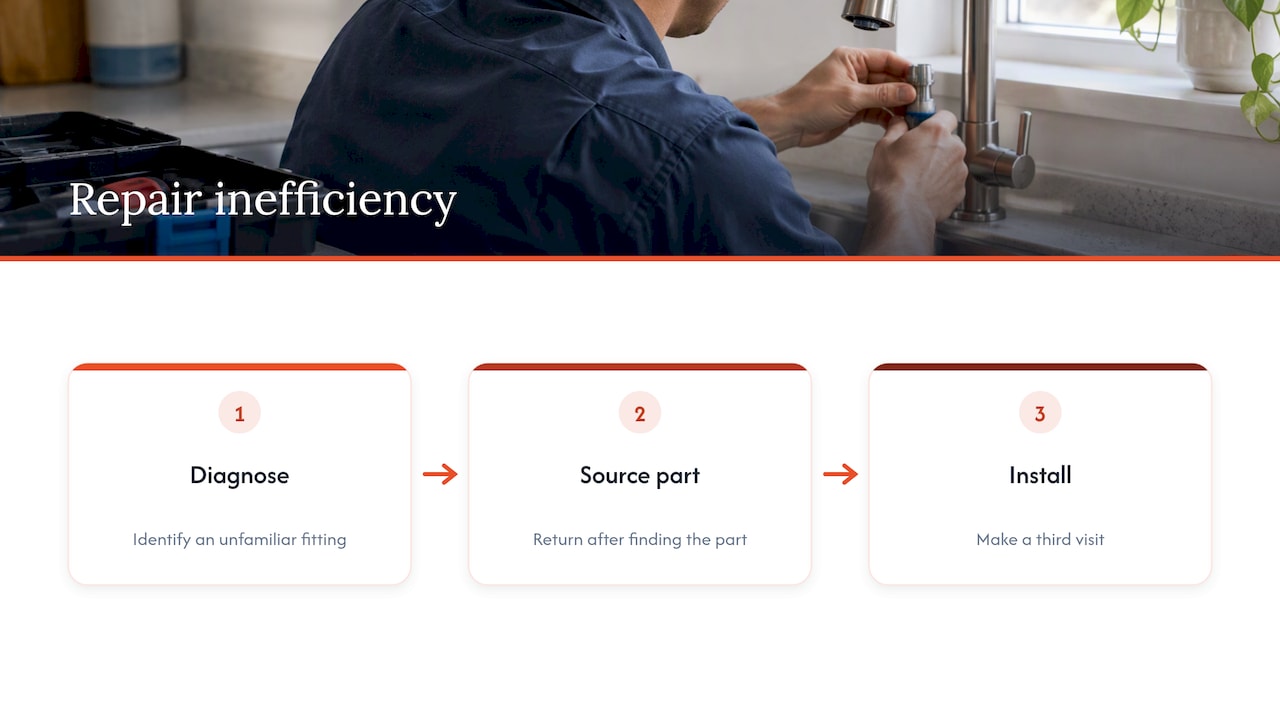
Apartment communities repeat the same faucet, water heater and floor plan. Scattered homes rarely do. The Harvard research describes a “repair inefficiency” pattern: a technician visits to diagnose an unfamiliar fitting, returns after sourcing the part, and visits a third time to install it. The same source puts maintenance 25 to 30 percent more costly than in concentrated multifamily developments. Treat that as a research finding for the type of housing it studied, not a guaranteed number for your portfolio, but the direction is reliable.
The fix is standardization wherever you control it. When you renovate or turn a unit, pick the same water heater model, the same interior paint, the same door hardware and the same appliance line across homes. Over a few years the portfolio converges on parts a technician can carry in the truck.
Vacancies do not arrive on a schedule
In an apartment complex, a leasing office handles a steady flow of move-outs. With scattered homes, one unit turns over in March, another in July. The Harvard paper notes that traditional marketing struggles because units become ready sporadically, and that successful operators often keep a central warehouse of standardized materials to soften supply delays and repeated travel. For an owner, the practical question is whether your manager has a repeatable make-ready routine, or reinvents it each time.
Security and vacant-home risk
Vacant houses are exposed in a way a unit inside an occupied building is not. The same research flags copper wiring and lead pipes as targets for thieves and scavengers, and says securing many individual homes demands far more resources than securing one building. If you are rehabbing, plan locks, lighting, utilities-on checks and regular walk-throughs from the first day of the project, not after the first incident.
What a scattered site manager actually has to do well
A useful way to compare managers is to follow one home through its life and ask who does what.
1. Maintenance and vendors
The Harvard research says to decide early whether to keep in-house maintenance crews or outsource to local providers who can handle a travel-heavy workload. Both models can work, and the tradeoffs are real:
| Approach | Strengths | Watch for |
|---|---|---|
| In-house technicians | Faster response, consistent quality, familiarity with your homes’ quirks | Needs enough homes nearby to keep crews busy |
| Outsourced local vendors | Flexible, wide coverage, specialty trades on demand | Pricing and quality vary; needs vendor oversight and clear bidding |
| Hybrid | In-house for routine work, vendors for roofing, HVAC replacement, major trades | Needs clear rules on who gets which job |
Whatever the model, ask how vendors are chosen and how you can see their pricing. Transparent vendor selection matters more when no owner is standing in the house. Our own post on the three kinds of maintenance your rental will need explains how routine, preventive and emergency work should be handled differently.
2. Tenant care and retention
Scattered-site housing leans on resident pride. HUD’s research on the subject points to smaller developments in stable neighborhoods and design that gives each household its own space as factors that encourage tenants to care for the home and keep maintenance from spiraling. Retention is the financial version of the same idea: a resident who stays three years costs you far less in turnover, vacancy and make-ready than one who stays one. See our short piece on making sure tenants take care of their rental home for practical steps.
Pets are part of this too. A clear policy, deposits or fees where local rules allow, and consistent enforcement help. We cover that in property management and pets.
3. Screening that holds up legally
With many houses and many leasing events, inconsistency creeps in. Fair housing guidance from the City of Phoenix notes that property managers can be held liable for the actions of their agents and staff, and stresses that consistent, documented screening applied the same way to every applicant is the strongest protection against complaints. A fair housing training manual for landlords adds the same advice on documenting conversations, agreements, breaches and damages, and recommends consulting an attorney when unsure.
In a scattered portfolio, this means one written screening standard used by every leasing agent in every neighborhood. Our guides on how a property management company handles tenant screening and the six-step screening process that meets HUD and FCRA rules lay out what that looks like. Screening scams are another risk when applications come in remotely; see what managers need to watch for.
4. Disclosures on every older home
Scattered portfolios often include older houses bought cheaply in established neighborhoods. Under the federal Lead-Based Paint Disclosure Rule, landlords of pre-1978 housing must give tenants the EPA-approved pamphlet, disclose known hazards and share existing records before a lease is signed. The EPA fact sheet also describes signed disclosure forms that must be kept for three years and penalties for noncompliance. The rule does not itself require testing or abatement, but state and local rules can add requirements, so confirm them where each home sits. Our two lead paint posts go deeper: what property managers need to know about disclosure and what managers and tenants should know.
5. Reporting and the tax picture
Owners of scattered homes get many invoices from many addresses. Good reporting breaks income and expenses out by property and separates repairs from improvements. That distinction matters at tax time. Summaries of IRS Publication 527 say that ordinary and necessary expenses such as management fees, repairs, insurance and utilities are generally deductible, while capital improvements that extend a property’s life, like a new roof, are depreciated over 27.5 years rather than expensed at once. Your CPA makes the final call, but your manager’s statements should make that call easy.
Questions to ask before you sign
Use this list in interviews. A good manager answers quickly and specifically.
- Who responds in my neighborhood? Ask for the team or technician who covers each of your addresses, not a central call center.
- How is maintenance staffed? In-house, vendors or hybrid, and how do you see vendor pricing?
- What is your make-ready routine? How many days from move-out to market-ready, and how do you stock common parts?
- What is the screening standard? Ask to see it in writing and ask how consistency is audited.
- How do you handle disclosures? Lead paint, local registration and inspection rules, for each property.
- What does my statement look like? One report per property plus a portfolio summary.
- How do you reduce turnover? Renewal outreach, inspections, responsiveness.
- What are all the fees? Management, leasing, maintenance and renovation fees, and what each one covers.
Our perspective on managing homes across many neighborhoods
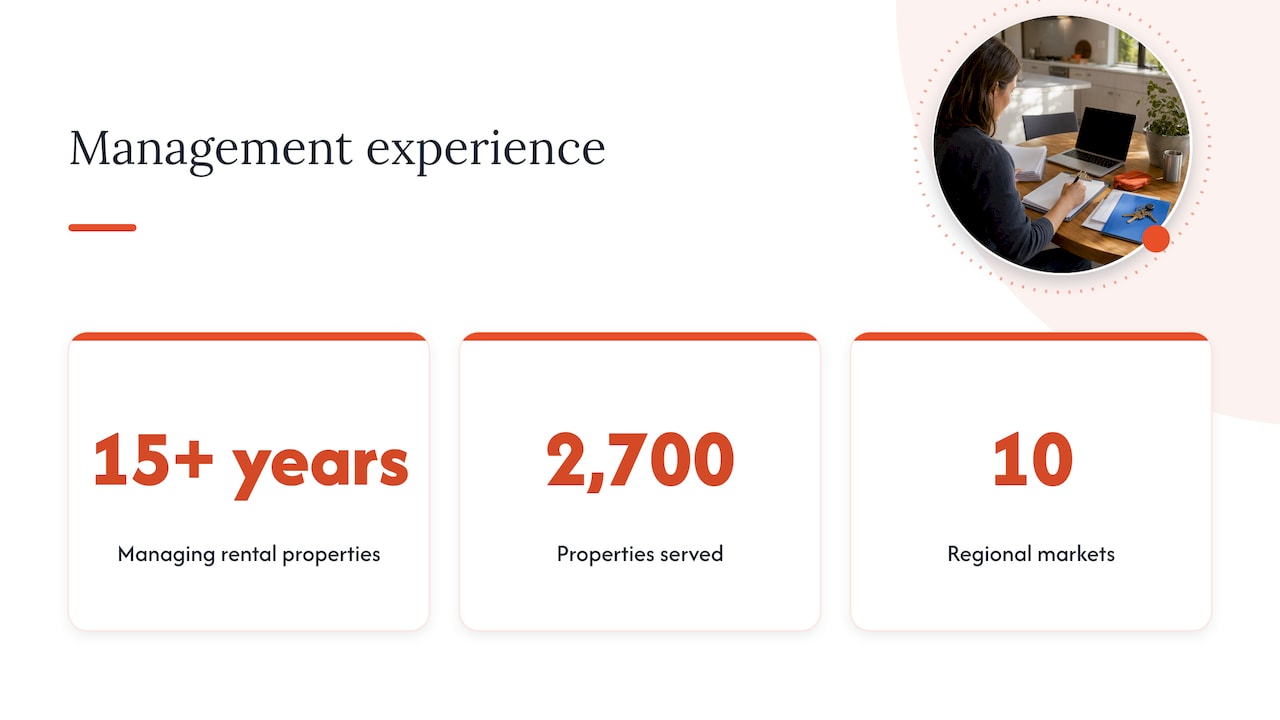
We have spent over 15 years managing rental properties and have served 2,700 properties across 10 regional markets. What that has taught us is that scattered-site management is a density problem. You cannot make a house in Jacksonville Beach behave like a unit in a big complex, so the answer is to build density into the team instead of the buildings.
That is why we organize around pods: small teams focused on a defined group of homes, so the same people see the same properties over time. We keep maintenance in-house, which means the technician who fixes your water heater has probably seen the last one in the neighborhood. We choose vendors transparently for work that needs a specialist. And we put real effort into resident retention, because a resident who renews is the best answer to the vacancy problem that scattered portfolios face.
We also think owners should be skeptical of any manager who promises that scattered homes will cost the same to run as a single apartment building. They will not. The honest pitch is that careful standardization, local crews and good data narrow the gap, and that a portfolio of houses brings diversification and resident demand that a single building does not.
— MediaBeast
Where we manage scattered portfolios
We operate in Charleston and Columbia, SC; Fort Worth and the wider Dallas-Fort Worth area, and Houston, TX; Kansas City and Overland Park; and Jacksonville and Jacksonville Beach, FL. If your homes sit in or between these markets, you can work with local teams instead of one distant office. For single-family, multifamily and build-to-rent owners, our property management service covers rental management, leasing and tenant placement, and in-house maintenance. If you are building or expanding a portfolio, our multifamily and build-to-rent services and brokerage services help you buy and sell in those markets, and our project management team oversees renovations. Fees are quoted per engagement, so talk to us about your specific addresses.
Planning a portfolio that is easier to manage
If you are still buying, you can make scattered ownership far easier with a few choices.
- Cluster your purchases. Two or three submarkets with 10 to 20 homes each is much easier to serve than one house in 12 zip codes.
- Prefer newer systems. Roofs, HVAC and water heaters with years of life left shrink the surprise repair list.
- Budget for turns. Set aside reserves per home, because sporadic vacancies will arrive without warning.
- Standardize on day one. Choose one set of finishes and fixtures for every renovation.
- Secure vacant homes early. Lighting, locks and regular checks cost less than recovering from theft.
- Keep asset-level data. Know which homes cost most to maintain and consider selling the outliers. Our asset management team works on exactly this kind of portfolio review.
Public-sector projects show the same thinking at a larger scale. HUD’s August 2026 write-up of a scattered-site redevelopment in Syracuse shows how derelict buildings across a neighborhood can be rebuilt into something stable. The lesson for private owners is that scattered assets do best when someone plans them as a portfolio, not as a pile of separate houses.
FAQ
Is scattered site property management more expensive than managing one apartment building?
Usually, per door, yes. Travel time, varied fixtures and sporadic turnovers add cost, and Harvard research on scattered-site rentals puts maintenance at 25 to 30 percent higher than in concentrated developments. A manager with local crews and standardized parts can narrow the gap, and you gain geographic diversification in return.
Should I choose a manager with in-house maintenance or outside vendors?
In-house crews tend to respond faster and learn your homes, but they need enough nearby volume to stay busy. Outside vendors give flexibility and specialty skills but need oversight. Many strong managers use both, so ask how work is assigned and how vendor pricing is shown to you.
Do lead paint rules apply to every scattered home I rent?
They apply to any rental built before 1978, with limited exemptions listed in the EPA’s fact sheet. Before the lease is signed, you must provide the pamphlet, disclose known hazards and share records you have. Check state and local rules for each home as well.
How can I keep screening consistent across many houses?
Use one written standard, apply it to every applicant and document each decision. Fair housing guidance stresses that inconsistent enforcement is behind many complaints. If you have a specific complaint or question, talk to a fair housing attorney.
Sources
- Stabilizing Neighborhoods Impacted by Concentrated Foreclosures: Scattered-Site Rental Housing Challenges and Opportunities, Harvard JCHS
- Review of Trends, Policies, Practices and Implications of Scattered Site Housing, Wellesley Institute
- Scattered-Site Housing, HUD USER
- Scattered-Site Development Transforms Derelict Properties in Syracuse, HUD USER
- IRS Publication 527 overview, standard-deduction.com
- IRS Publication 527: Tax Rules for Rental Property, LegalClarity
- Lead-Based Paint Disclosure Rule Fact Sheet, EPA
- Minimizing Fair Housing Liability, City of Phoenix
- Know Your Responsibilities manual, Equal Housing