Jacksonville Beach Rentals: $1,614 Avg and What Moves the Needle
October 6, 2026
The Jacksonville Beach rental market is stabilizing in 2026: average rents sit near $1,614 and demand is warm but cooling from recent spikes, which gives renters modest room to negotiate and tells owners to price new listings against real local comps rather than last year’s numbers.
TL;DR:
- Rents are stabilizing around $1,614 with a small decline from recent peaks, giving renters negotiation power and emphasizing the importance of checking local comps.
- Fewer new units are being built, which combined with steady demand from military, port, and seasonal workers, supports a modest rent increase by late 2026.
- Neighborhood variation is significant, with coastal and downtown areas seeing higher demand and prices, while westside and northside offer more affordable options.
- Renters should compare multiple listings and use the city’s code enforcement data before signing, while owners need to price based on current local comps and prepare units thoroughly.
- Active management, local knowledge, and timing listings in late winter or early spring can improve leasing speed and rent performance in this balanced market.
Table of Contents
- What the Jacksonville rental market looks like right now
- Why rents are moving the way they are
- Where rents and availability differ across neighborhoods
- What renters should expect when searching right now
- How owners should price and prepare a rental right now
- What our local experience in Jacksonville tells us
- Our take on what actually moves the needle this year
- How we help Jacksonville Beach owners price and fill rentals faster
- FAQ
- Sources
What the Jacksonville rental market looks like right now
Average rent across the Jacksonville metro is about $1,614, and Zillow’s market summary labels the temperature “warm” with roughly 3,700 active rental listings and a small year-over-year dip in rent. That is a market with plenty of choice but not the frantic bidding seen in 2022 and 2023.
A few numbers frame where things stand:
- Average rent: $1,614, per Zillow.
- Active listings: roughly 3,744 units on the market at any given time.
- Market temperature: warm, meaning demand is steady but not overheated.
Some aggregator sites peg the median closer to $1,699, a gap worth noting rather than ignoring. Different platforms pull from different listing pools, so treat the $1,614 figure as the benchmark and use any higher number you see elsewhere as a reminder to check multiple sources before signing or pricing a lease.
Why rents are moving the way they are
Two forces are pulling in opposite directions, and together they explain the calm. On the supply side, Colliers’ Q1 2026 multifamily report finds new unit deliveries slowing while occupancy stays healthy, a pattern Matthews’ Q2 2026 report confirms with measured stabilization after a multi-year construction boom.
The drivers worth tracking:
- Supply contraction: fewer new units are breaking ground, which tends to firm up rents once the current pipeline is absorbed.
- Demand sources: military relocations, port and logistics employment, and seasonal tourism all add renters without a single dominant driver.
- Policy and transparency: the city’s new Stable Housing site and its Affordable Housing Dashboard give renters and owners access to code enforcement and eviction filing data that used to be hard to find.
Both Colliers and Matthews point toward modest rent growth returning by late 2026 as the construction slowdown works through the market, not a sharp spike.
Where rents and availability differ across neighborhoods
Jacksonville is large enough that averages hide real variation. Beach communities, downtown-adjacent areas, and suburban pockets each behave differently, and Realtor shows neighborhood medians spreading well above and below the metro figure.
Rough buckets renters and owners should know:
- Jacksonville Beach and the coastal strip: tighter inventory, higher demand from short-term and seasonal renters, rents that run above the metro average.
- Downtown and Riverside-adjacent areas: more new construction, which keeps availability higher and pricing closer to the metro median.
- Suburban Southside and Mandarin: family-oriented inventory with steadier, less seasonal demand.
- Westside and Northside: generally the most affordable pockets, often where new affordable housing projects are concentrated.
New below-market developments tracked on the city’s dashboard are adding supply specifically in a few of these pockets, which is worth checking before assuming a neighborhood is uniformly tight. For side-by-side comps, Auben Realty’s Jacksonville, FL listings page and the city’s own dashboard are both useful starting points.
What renters should expect when searching right now
A warm-but-calming market means listings move in weeks, not days, and landlords are more open to small concessions than they were two years ago, especially outside peak summer months.
A short checklist before you sign anything:
- Check the Stable Housing portal for code enforcement history or eviction filings tied to the address, using the data the city’s dashboard now makes public.
- Compare the listed rent against both Zillow’s $1,614 average and at least one other active listing in the same zip code.
- Ask about concessions such as a reduced deposit or a free week of rent, which landlords are more willing to offer when a unit has sat vacant past 30 days.
- Watch for red flags: vague maintenance language, no willingness to share an inspection report, or a landlord who will not provide a lease copy before a deposit.
Pro Tip: Searching in November or December typically means less competition and more room to negotiate than a summer move.
How owners should price and prepare a rental right now
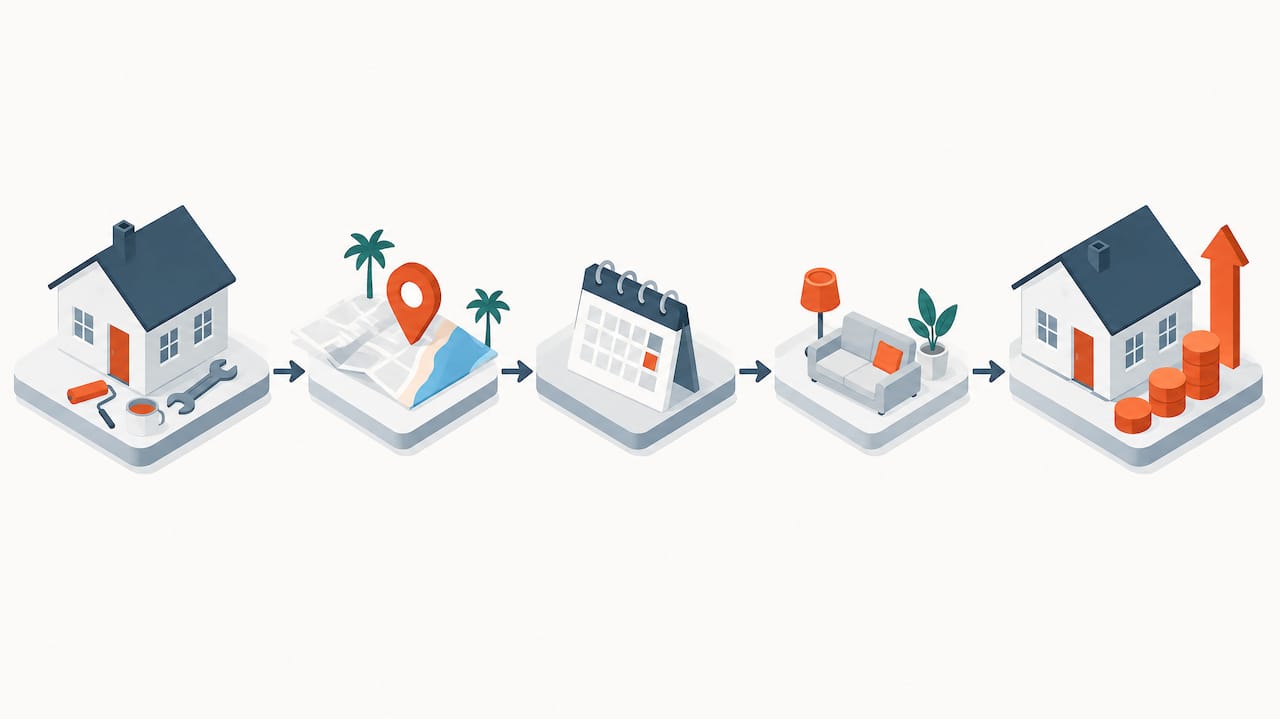
Pricing a unit correctly the first time matters more in a stabilizing market than a hot one, because overpricing now means sitting vacant while comparable units lease around you.
Steps that keep a listing competitive:
- Pull comps from Zillow, Realtor.com, and active local listings, then adjust for condition, parking, and proximity to the beach or job centers.
- Run a rent-ready checklist: working smoke detectors, serviced HVAC, fresh paint, professional photos, and all required disclosures in order before the first showing.
- Time the listing: list in late winter or early spring ahead of peak summer demand, and reserve concessions for units that have been on the market more than three to four weeks rather than offering them upfront.
- Screen thoroughly: verify income and rental history, and keep screening criteria consistent with city fair housing guidance to avoid compliance issues.
Pro Tip: A small cosmetic refresh, like new light fixtures and a deep clean, often returns more in faster leasing than a rent increase returns in extra monthly income. Owners estimating renovation budgets before listing can also run numbers through a Jacksonville ARV calculator to check whether upgrades pencil out before committing.
What our local experience in Jacksonville tells us
Our End of 2025 Jacksonville Market Overview lines up closely with what Colliers and Matthews report for 2026: a market cooling from its pandemic-era peak but holding firm rather than falling.
What that experience looks like in practice:
- We have managed rental property in Jacksonville for several years as part of a broader footprint of over 15 years in business and roughly 2,700 properties served across ten regional markets.
- We have seen vacancy periods shrink by a week or more on units where owners accepted a modest, time-limited concession instead of holding firm on asking rent.
- We have seen that units priced within a few percentage points of true local comps lease faster than units priced from outdated or national-average figures.
Our take on what actually moves the needle this year
Renters get the most value from checking the Stable Housing dashboard before signing, not from chasing the lowest listed rent. Owners get more from pricing against real local comps and leaning on professional management than from betting on a rent increase the data does not yet support. Everything else is secondary to those two moves right now.
— MediaBeast
How we help Jacksonville Beach owners price and fill rentals faster
Setting the right rent and keeping a unit occupied takes more than a glance at an average. We built our Jacksonville presence specifically to combine the kind of local comps and renovation know-how described above with full-service management, so owners do not have to track multiple reports themselves to get a confident number.
What that looks like day to day:
- Property Management: ongoing leasing, rent collection, and maintenance coordination so owners stay hands-off.
- Project Management: rent-ready renovation oversight before a unit ever hits the market.
- Brokerage Services: support for owners who decide to buy or sell rather than hold.
| Service | What it covers |
|---|---|
| Property Management | Tenant placement, rent collection, maintenance |
| Project Management | Renovation oversight before listing |
| Asset Management | Portfolio-level oversight for investors |
| Brokerage Services | Buying and selling rental property |
We have served properties across multiple regional markets over many years, including a growing presence in Jacksonville. If you own a rental here and want a number grounded in current local data rather than a national average, our property management team can walk through a rental analysis specific to your property and neighborhood.
FAQ
Is Jacksonville a good rental market right now?
Jacksonville is a reasonably favorable market for both renters and owners in 2026, with average rent near $1,614 and a “warm” rather than overheated temperature. Renters have more listings to choose from than in recent peak years, while owners still see healthy occupancy according to Colliers.
What is the current rental market situation in Florida?
Florida’s rental markets, including Jacksonville, are broadly moving from a recent period of rapid rent growth toward a steadier, more balanced pace. Jacksonville’s own data shows deliveries slowing and occupancy holding, a pattern consistent with the stabilization Matthews’ Q2 2026 report describes for the metro.
Is Jacksonville a buyer’s or seller’s market right now?
For rentals specifically, Jacksonville leans closer to balanced than firmly in either direction, with warm demand but enough active listings to give renters some leverage. Owners still benefit from pricing carefully against current comps rather than assuming continued rapid rent growth.
What are the best areas to rent in Jacksonville, Florida?
Jacksonville Beach and the coastal strip tend to command higher rents due to tighter inventory, while downtown-adjacent and suburban areas like Southside and Mandarin offer more availability closer to the metro average. Checking current listings on a local rentals page alongside the city’s housing dashboard gives a clearer neighborhood-by-neighborhood picture than relying on citywide averages alone.
Sources
- Average Rental Price in Jacksonville, FL | $1,614
- Jacksonville multifamily market report Q1 2026
- Jacksonville, FL multifamily market report Q2 2026 (Matthews)
- Stable housing website launched with city code enforcement data