Leasing Only Services: 5 Steps, FCRA Rules, and a Landlord Checklist
October 9, 2026
A leasing only service handles tenant placement, meaning it markets your property, screens applicants, and signs the lease, while you keep running day-to-day operations yourself. It fits owners who want a professional hand finding and vetting tenants without handing over ongoing management. The typical cost is a one-time fee, often a flat rate or approximately equal to a month’s rent, paid when a tenant signs.
TL;DR:
- Standard packages usually include listing creation, rental platform distribution, showings, applicant screening, and lease preparation; photography upgrades and move in reports may cost extra.
- Placement fees usually cover marketing, showings, screening, and lease preparation; rent collection, maintenance, and renewals remain your responsibility unless separately contracted.
- Before signing, verify the screening provider, report contents, record lookback policy, advertising platforms, sample lease, and how denied applicants receive notices.
- Landlords remain responsible for outsourced screening under fair housing and consumer reporting rules; negative report items older than seven years generally cannot appear.
- The IRS generally treats leasing commissions as deductible rental expenses, but some commissions related to mortgages must be capitalized; confirm the distinction with a tax professional.
Table of Contents
- Overview of typical lease-only scope and optional add-ons
- Step-by-step duties performed during the leasing process
- Why landlords pick lease-only instead of handling placement themselves
- Tenant screening, FCRA rules, and HUD guidance on advertising
- How leasing-only providers charge and typical time-to-lease
- Single checklist to evaluate and hire a lease-only provider
- How Auben Realty applies these practices for tenant placement
- Who lease-only actually fits
- Start tenant placement without the DIY workload
- FAQ
- Sources
- Primary sources for landlord compliance and tax guidance
Overview of typical lease-only scope and optional add-ons
A standard lease-only package covers the work needed to get a qualified tenant into your unit and stops there. Most providers include:
- Listing creation with photos and a written description built for rental search sites.
- Syndication across major rental platforms to reach active renters quickly.
- Scheduled showings or self-tour access coordinated on your behalf.
- Application intake and a documented screening process.
Beyond that baseline, many providers offer add-ons such as professional photography upgrades, expanded syndication to niche or local sites, custom lease addenda for pets or parking, and a move-in inspection report with photos. Deliverables and timelines are usually spelled out in a service agreement before you sign, so you know what’s included and what costs extra before the listing goes live. Reviewing that agreement closely helps you avoid surprises once the process starts, since lease-only providers vary widely in how much marketing reach and screening depth they build into the base fee.
Step-by-step duties performed during the leasing process
Here’s what actually happens between hiring a lease-only provider and handing you the keys to a signed lease:
- Pricing the unit. A rent analysis compares your property against similar local listings to set a competitive asking price.
- Building the listing. Photos, floor plans, and copy go live, then get pushed across rental syndication channels, a process detailed in rental listing syndication strategies.
- Running showings. Agents schedule in-person tours or set up self-tour technology for prospective renters.
- Screening applicants. Credit, eviction, and background checks get pulled, reviewed against written criteria, and documented.
- Executing the lease. The provider prepares lease paperwork, collects the security deposit and first month’s rent, and passes tenant details to you for ongoing management.
Pro Tip: Ask upfront exactly where the provider’s responsibility ends, specifically whether they coordinate key handoff and utility transfer or leave that step to you.
Everything after the signed lease, rent collection, maintenance calls, renewals, stays on your plate unless you’ve separately arranged for ongoing management.
Why landlords pick lease-only instead of handling placement themselves
Self-managing landlords often underestimate how much professional marketing and screening speed up placement. A lease-only provider typically brings:
- Wider marketing reach through syndication networks most individual owners can’t access alone.
- Fewer vacancy days thanks to faster, more consistent showings and follow-up.
- Lower recurring costs than a full-service monthly management contract, since you only pay once per placement, a gap explored in this leasing fee versus management fee comparison.
- Full control over vendor selection, rent collection, and maintenance decisions after the tenant moves in.
Leasing commissions and tenant-placement fees are generally deductible as rental expenses on Schedule E, according to IRS Publication 527, which often offsets much of the upfront cost. A tax professional can confirm how that applies to your specific filing situation.
Tenant screening, FCRA rules, and HUD guidance on advertising
Outsourcing placement doesn’t transfer your legal responsibility. When a provider pulls a credit or background report on your behalf, that report counts as a consumer report under the Fair Credit Reporting Act, and you’re required to have a permissible purpose and follow proper adverse-action procedures, as outlined by the FTC’s guidance for landlords. Negative items older than seven years generally cannot appear on these reports under FCRA Section 605(a)(5).
HUD guidance on AI and tenant screening warns that automated screening tools and targeted ad delivery can produce discriminatory effects, and housing providers remain responsible under the Fair Housing Act even when screening or advertising is outsourced.
Housing providers retain responsibility for screening outcomes even when using automated tools, regardless of whether a third-party vendor built the model.
Before handing off screening, require:
- Written screening criteria applied consistently to every applicant.
- A defined lookback window for criminal and eviction records.
- A documented adverse-action notice process with applicant dispute rights.
- Record retention showing how each decision was made.
CFPB reporting on tenant background checks found screening companies frequently produce errors, which makes vendor transparency a practical safeguard against disputes and complaints.
How leasing-only providers charge and typical time-to-lease
Pricing structures vary, but three models dominate the market:
- A flat fee set regardless of rent amount.
- A percentage of the first month’s rent, commonly used as the placement fee.
- A tiered package where higher fees unlock expanded marketing or faster turnaround.
These fees typically cover marketing, showings, screening, and lease preparation, but exclude ongoing services like rent collection, maintenance coordination, or lease renewals. Those require a separate management agreement. Timeline from listing to signed lease depends on local rental demand, pricing accuracy, and how aggressively the unit gets marketed, with well-priced, well-marketed units typically moving faster than units sitting stale on fewer platforms.
On the tax side, IRS guidance treats leasing commissions as deductible rental expenses, while certain mortgage-related commissions must be capitalized instead of deducted outright. That distinction is worth raising with your accountant before year-end filing.
Single checklist to evaluate and hire a lease-only provider
Use this sequence when comparing providers:
- Check screening transparency. Ask which screening partner they use, what’s included in the report, and their lookback window policy, a process explained in how property management companies handle tenant screening.
- Review advertising reach. Confirm which platforms they syndicate to and whether photography is included or an add-on.
- Request a sample lease. Read the actual lease language you’d be signing tenants to, not just a summary.
- Ask about adverse-action handling. Get specifics on how denied applicants are notified and what documentation they receive.
- Request references. NARPM’s hiring guidance recommends verifying a provider’s screening, reporting, and lease-enforcement track record before signing.
Pro Tip: Treat vagueness about screening sources or an unlimited criminal lookback window as a red flag, not a minor detail.
How Auben Realty applies these practices for tenant placement
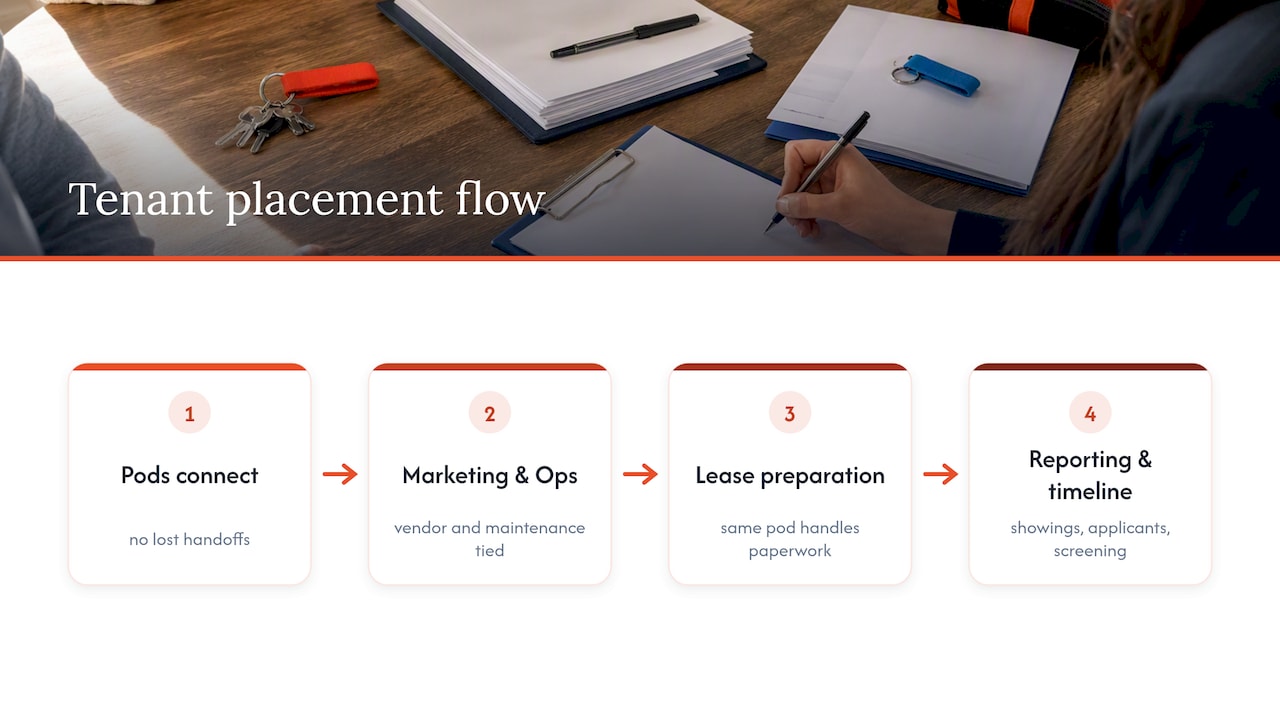
Our team built a pod-based structure so tenant placement doesn’t get lost in handoffs between departments. Maintenance and vendor coordination mean the person marketing your listing stays connected to the person preparing your lease paperwork. When tenant placement is handled, owners receive clear reporting on showing activity, applicant status, and screening outcomes, plus a documented timeline from listing to signed lease so there’s no guessing about where things stand, with helpful guidance on how to sell a house with tenants if needed later.
Who lease-only actually fits
Lease-only works best for owners who are comfortable handling maintenance calls and rent collection themselves but want professional marketing and screening to fill vacancies faster. If that’s you, getting a quote and preparing a basic property checklist, photos, rent comps, move-in condition, is the fastest way to start. Our team offers that as a direct next step.
— MediaBeast
Start tenant placement without the DIY workload
Finding and vetting tenants takes real time, and a bad screening process can cost you more in vacancy days and turnover than the fee ever would. We handle the marketing, showings, and screening so you spend less time chasing leads and more time running your property the way you want.

What this looks like in practice:
- A rent analysis and listing built to perform on major rental sites.
- Screening backed by documented criteria and a clear adverse-action process.
- Direct reporting so you always know where your placement stands.
If you’re ready to see what tenant placement through our property management services looks like for your property, reach out and get a quote today.
FAQ
What is the 90% rule in leasing?
For rental housing, landlords are more likely to encounter occupancy or renewal benchmarks set by their own portfolio rather than a formal 90% test.
What are the four types of leases?
Common lease classifications include gross leases, net leases, modified gross leases, and percentage leases, each differing in how expenses like taxes, insurance, and maintenance are split between landlord and tenant. Residential leasing-only services typically work with standard gross leases rather than the commercial variants.
What is the 1.5 rule when leasing a car?
It doesn’t apply to residential property leasing, which uses rent comparables and local market analysis instead.
What are the three main types of leases?
Residential leasing typically involves fixed-term leases, month-to-month agreements, and sublease arrangements, each offering different levels of flexibility for landlords and tenants. A lease-only provider can prepare any of these formats depending on what fits your property strategy, as covered in this overview of month-to-month lease benefits.
How long does a leasing-only service typically take to fill a vacancy?
Turnaround time depends on local rental demand, how competitively the unit is priced, and how broadly it’s marketed, with well-priced listings generally moving faster than units with limited syndication. Ask any provider for their average days-on-market figure before signing an agreement.
Sources
- Using consumer reports: What landlords need to know — FTC
- Publication 527 (Residential Rental Property) — IRS
- HUD issues guidance on AI and tenant screening — HUD Archives
- CFPB reports highlight problems with tenant background checks — CFPB
- How to hire a property manager — NARPM
Primary sources for landlord compliance and tax guidance
These sources informed the legal and financial points covered above:
- HUD guidance on AI and tenant screening covers fair housing risk in automated screening and advertising tools.
- FTC guidance for landlords explains consumer report obligations under FCRA.
- IRS Publication 527 details deductibility of leasing commissions and management fees.
- CFPB reporting on tenant background checks documents common screening errors and dispute processes.