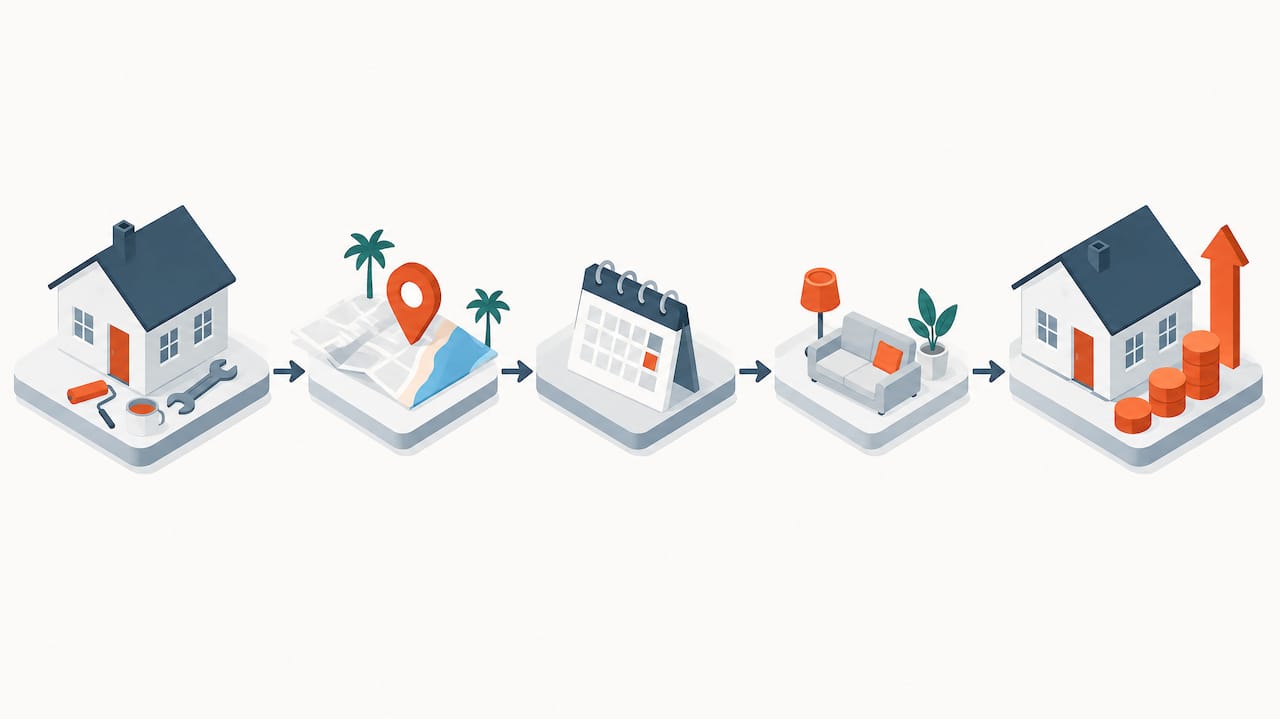
CapEx Planning for Rentals: Replace Flat Rules With Component Forecasts
Build a component-level forecast of every major system in your rental, then fund a dedicated reserve account sized to that forecast. That single step prevents surprise replacements from wrecking your cash flow. IRS Publication 527 draws the tax line between capital work and repairs, while Freddie Mac’s reserve guidance shows professional investors size reserves around each component’s remaining life, not a flat percentage.
TL;DR:
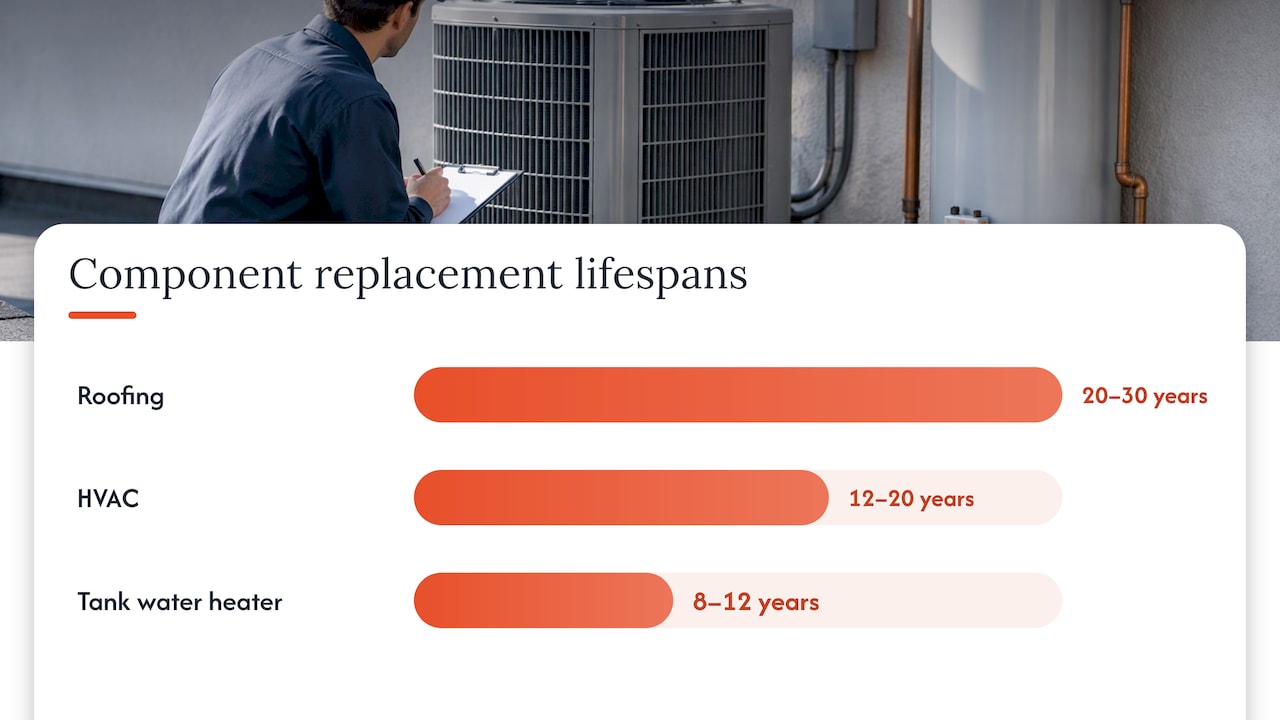
- Typical service lives vary: roofs last 20 to 30 years, HVAC systems 12 to 20, and tank water heaters 8 to 12.
- Estimate each component’s remaining life as a range, budget from its earlier end, and divide replacement cost by years remaining to set annual contributions.
- Deduct ordinary repairs in the year paid, but capitalize work that restores, improves, or changes a property’s use; ask a tax professional about mixed invoices.
- The 1% rule is only a placeholder, the 2% rule screens purchases, and the 50% rule estimates expenses; none predicts component replacement timing.
- Hold reserves in a dedicated bank account, reconcile the balance monthly against forecast obligations, and review upcoming replacements and revised life estimates quarterly.
Aubenrealty
Plan Rental Upgrades With Less Stress
Auben Realty provides property management and renovation services to help owners manage rental properties and plan for major work.
Explore Auben Realty’s services
Table of Contents
What counts as CapEx for a rental, and why classification matters
Capital expenditures are purchases that replace or substantially improve a structural component and extend its useful life, think roofs, HVAC systems, water heaters, major plumbing or electrical work, and large appliance replacements. Maintenance, by contrast, keeps existing components working: patching a leak, servicing a furnace, repainting a wall.
Typical capital items and rough useful-life ranges:
- Roofing: 20 to 30 years depending on material.
- HVAC systems: 12 to 20 years with regular servicing.
- Water heaters: 8 to 12 years for tank units.
- Major plumbing or electrical upgrades: 20 to 40 years.
- Flooring and cabinetry replacements: 10 to 20 years.
Getting this split wrong has real consequences. A repair you book as a capital improvement, or vice versa, changes what you can deduct this year versus depreciate over time, and IRS Publication 527 sets out exactly which costs must be capitalized. Misclassification also distorts your cash flow picture, since a deductible repair hits this year’s return while a capitalized item spreads across decades.
How do you forecast replacement timing component by component?
A flat percentage rule treats a 3-year-old water heater the same as one about to fail. Component-level forecasting fixes that by tracking each system’s actual position in its life cycle.
- Inventory every major component: roof, HVAC, water heater, plumbing, electrical panel, flooring, appliances, with install dates where known.
- Assess current age and condition through visual inspection, maintenance history, and manufacturer specs.
- Estimate a remaining useful life (RUL) range for each item rather than a single year, since real-world performance varies with usage and climate.
- Plot a replacement year for each component onto a multi-year calendar, prioritizing anything with a narrow or near-term RUL range.
- Adjust estimates using inspection findings and vendor quotes whenever a contractor flags accelerated wear.
Freddie Mac’s multifamily guidance requires consultants to base reserve figures on a documented opinion of remaining useful life, not a convenient round number, and that discipline works just as well for a single-family rental.
Say a $9,000 HVAC system has 6 years of RUL left. Dividing the cost by the timeline gives you a $1,500 annual set-aside for that one component. Repeat the exercise across your full inventory and sum the annual figures to get your total yearly reserve contribution.
Pro Tip: Keep RUL estimates as ranges (e.g., 4 to 7 years) rather than single points, then budget off the earlier end of the range to stay ahead of surprises.
Why the 1%, 2%, and 50% rules fall short on their own
Rules of thumb exist because component forecasting takes effort, and they’re a reasonable starting point before you have a full inventory.
- The 1% rule sets aside a small fixed percentage of a property’s value annually for capital reserves, serving as a rough placeholder until you’ve mapped actual components.
- The 2% rule (an acquisition screening rule, not a reserve rule) compares monthly rent to purchase price but does not provide information about replacement timing.
- The 50% rule assumes operating expenses, including reserves, consume roughly half of gross rent, useful for quick screening but not for scheduling a roof replacement.
None of these rules account for a property’s actual age profile. A 25-year-old roof and a new one get treated identically under a flat percentage, which is exactly the gap Freddie Mac’s component-based approach is built to close.
When to repair, replace, or upgrade, and what taxes have to do with it
A repair generally makes sense when the fix is isolated, costs well under replacement value, and doesn’t reset the component’s expected life.
IRS Publication 527 draws the tax distinction: amounts that restore, improve, or adapt a property to a new use must be capitalized and depreciated over the asset’s class life, while amounts that keep a property in ordinary operating condition are deductible repairs in the year paid. Depreciation is simply the tax mechanism for recovering a capital cost over time rather than all at once.
Quick reference points:
- Repair cost under roughly 40% of replacement cost: usually repair.
- Component past its documented useful-life range with rising failure frequency: usually replace.
- Any work that changes use, expands capacity, or materially improves the asset: capitalize per IRS guidance.
Get a tax professional involved whenever a project mixes repair and capital elements in the same invoice, since the IRS allocation rules get specific fast.
How inspections keep your forecast honest
A forecast is only as good as the condition data behind it, which is why Freddie Mac’s property condition report standards require reserve analyses to reflect documented, observable conditions rather than assumptions.
- Inspect roofs and HVAC systems annually, water heaters and plumbing every 1 to 2 years, and structural elements every 3 to 5 years.
- Document condition, visible wear, service records, and any manufacturer defects during each visit.
- Fold contractor quotes into your replacement calendar whenever an inspection reveals faster-than-expected deterioration, and keep a running replacement log so each decision has a paper trail.
Pro Tip: Photograph every component at each inspection; a dated photo log turns a vague “it’s getting old” into defensible evidence for your reserve calculations.
Should climate risk change your replacement timeline?
Hazard exposure shortens useful life faster than age alone predicts. A roof in a hail-prone region or an HVAC condenser in a flood zone carries a higher failure probability than the same component in a milder climate, and EPA’s resilience planning framework recommends treating resilience work as a strategic planning input rather than an optional add-on.
- Build a separate resilience line item into your reserve for high-exposure components (impact-resistant roofing, elevated mechanicals, backup sump systems).
- Coordinate resilience upgrades with insurance review, since some measures can affect premium eligibility.
- Treat hazard-driven replacements as earlier-than-average RUL rather than waiting for a failure to force the decision.
Proactive resilience spending tends to stabilize long-term operating costs rather than adding a pure expense.
How do you actually hold and track the reserve money?
Keep reserve funds in a separate bank account, not blended with operating cash, so the balance reflects what’s actually earmarked for future components rather than what’s available for this month’s expenses. A simple ledger column showing “reserve balance versus forecast obligation” prevents the account from quietly draining into day-to-day spending.
- Hold reserves in a dedicated account and reconcile it monthly against your component calendar.
- Report quarterly on reserve balance versus forecast, upcoming replacements due within 12 months, and any components whose RUL estimate changed after inspection.
- Track a few core KPIs: funded ratio (reserve balance divided by forecast obligation), near-term replacement exposure, and average annual set-aside per component. Our key factors to track cover related metrics worth watching alongside reserve health.
A spreadsheet template should include component name, install date, estimated RUL range, projected replacement year, estimated cost, and annual set-aside. Once you’re managing several properties with overlapping timelines, that spreadsheet usually needs to graduate into dedicated project management support to stay accurate.
Pro Tip: Color-code your replacement calendar by urgency (within 2 years, 3 to 5 years, 5-plus years) so a quick glance tells you where this year’s reserve dollars need to go.
What’s the realistic timeline for roofs, HVAC, and water heaters?
Roofing typically lasts 20 to 30 years depending on material, with asphalt shingles at the shorter end and metal or tile roofing extending well past 30 years under good maintenance. Climate exposure, ventilation quality, and installation workmanship all shift that range, which is why a visual inspection matters more than relying on age alone.
HVAC systems generally run 12 to 20 years, and DOE’s Building America HVAC guidance notes that proper sizing and diagnostics, specifically Manual J, S, and D calculations, directly affect how long a system lasts and how much it costs to run. An oversized or poorly diagnosed system tends to fail earlier and cost more in the meantime. The same guidance points out that scheduling an HVAC replacement to coincide with efficiency upgrades can capture rebates and financing that improve the return on that capital dollar.
Water heaters are shorter-lived, typically 8 to 12 years for standard tank units, with usage patterns and water quality driving most of the variation. Hard water accelerates sediment buildup and shortens tank life meaningfully compared to a unit on a softened supply.
Cost drivers across all three categories tend to be the same: material or equipment grade, labor availability in your market, code-required upgrades triggered by the replacement, and timing relative to contractor demand cycles. Replacing a roof or HVAC system during peak season (spring and summer for both) often costs more than scheduling the same work in the off-season, which is one more reason a multi-year forecast beats reacting to failures.
How does CapEx planning fit into a broader asset management strategy?
A component forecast is a tactical tool, but it only pays off when it’s connected to the property’s longer-term financial plan. Asset management looks beyond the next replacement to questions like: does this property’s capital trajectory support the return we’re targeting, and does the timing of major replacements align with refinancing, sale, or hold decisions.
Practically, that means your reserve calendar should feed into the same pro forma that drives acquisition and hold-period decisions. A roof due in year 4 and an HVAC system due in year 6 aren’t just maintenance line items, they’re cash flow events that affect whether a refinance in year 5 makes sense or whether a sale before a major replacement captures more value than holding through it.
This is also where portfolio-level thinking adds value. An owner with several properties can stagger discretionary upgrades to smooth annual cash outlay, while mandatory replacements (a failed water heater doesn’t wait for a convenient year) still get funded from the dedicated reserve regardless of timing. For investors weighing whether a given property’s capital profile supports continued ownership, evaluating single-family rental investments alongside the reserve forecast gives a fuller picture than looking at rent roll alone.
The core discipline is treating CapEx forecasting as one input into asset-level decisions rather than an isolated maintenance exercise, which is exactly how institutional reserve standards like Freddie Mac’s are designed to function within a larger loan and asset review.
How should you talk to tenants about planned capital work?
Tenants experience capital improvements as disruption first and benefit second, so timing and clarity in communication matter as much as the work itself. Giving advance notice, typically 30 to 60 days for major projects like roofing or HVAC replacement, lets tenants plan around noise, access restrictions, or temporary utility interruptions.
Clear, specific notices work better than vague ones. Tell tenants what’s happening, which areas will be affected, how long the work should take, and who to contact with questions, rather than a general notice that work is “scheduled soon.” For anything requiring unit access, confirm scheduling windows directly rather than assuming a posted notice is sufficient.
Framing matters too. Positioning a capital project as an investment in the property’s condition, rather than purely an inconvenience, tends to land better, especially when the upgrade directly benefits the tenant (a new water heater means more reliable hot water, a roof replacement means fewer leak-related disruptions going forward). When upgrades touch unit finishes, our renovation ROI guidance covers which improvements tenants tend to notice and value most.
For projects affecting common areas or security systems, such as upgraded locks, cameras, or access control, communicating the safety rationale alongside the timeline helps tenants see the upgrade as a benefit rather than just construction noise.
Does CapEx spending actually affect rent and occupancy?
Deferred capital work shows up in vacancy and turnover numbers before it shows up in a reserve shortfall. A property with an aging HVAC system or persistent roof leaks tends to see longer vacancy periods between tenants and more difficulty justifying market rent, since prospective tenants notice visible deferred maintenance during showings.
Conversely, well-timed capital improvements support rent positioning. A new roof or updated HVAC system isn’t just a cost center, it’s a feature that supports asking rent at or above market comparables and reduces the maintenance-related complaints that drive tenant turnover. Security upgrades fall into this category too: modern locks, cameras, or access systems are increasingly expected amenities in competitive rental markets, and underinvesting there can quietly suppress both rent and retention.
The connection runs both ways. Planning CapEx around lease turnover, scheduling major work for vacant periods when possible, minimizes the occupancy disruption that comes with tenant-occupied capital projects, while also letting you market the improvement to incoming tenants as a selling point. Owners who treat capital reserves as purely a cost line, rather than a lever on rent and retention, tend to underfund the exact items that would have protected their occupancy numbers.
A single-property spreadsheet works fine for one rental, but tracking RUL estimates, replacement calendars, and reserve balances across multiple properties quickly outgrows a basic template. At minimum, a usable system needs to track component inventory, install dates, RUL ranges, projected replacement years, estimated costs, and reserve balance against forecast obligation, updated as inspections and vendor quotes come in.
Property management software with maintenance tracking modules can centralize this data alongside work orders and vendor history, which matters because Freddie Mac’s reserve standards emphasize that forecasts need to be tied to documented conditions, not estimates pulled from memory. A system that logs every inspection, contractor quote, and completed replacement builds exactly that evidence trail over time.
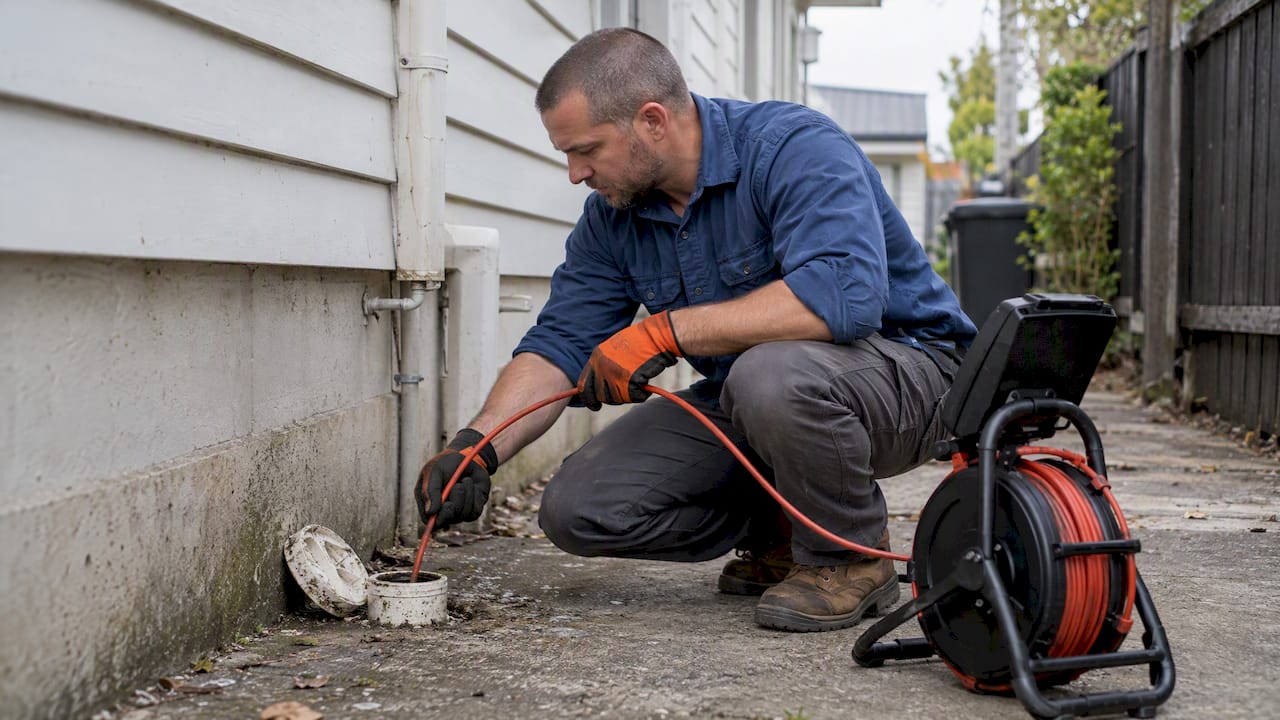
For plumbing specifically, camera-based condition assessment has become a practical way to verify pipe condition without guesswork. A pipe condition assessment using HD sewer camera inspection can confirm whether aging plumbing has years of life left or needs to move up the replacement calendar, turning a vague age-based estimate into documented evidence.
Whatever system you use, the goal is the same: replace guesswork with a living record that updates as conditions change, so your annual reserve contribution reflects reality rather than a static plan made years ago.
What does effective CapEx planning actually look like in practice?
Consider a typical single-family rental with a 22-year-old roof, a 14-year-old HVAC system, and a 9-year-old water heater. A component-level inventory flags the roof as having 3 to 8 years of RUL remaining, the HVAC system as having 2 to 6 years, and the water heater as nearing the end of its typical 8 to 12 year range. Converting those ranges into annual set-asides, budgeting off the earlier end of each range, produces a combined reserve contribution that funds all three replacements before any of them becomes an emergency.
When the water heater fails in year 2, a flat reserve hasn’t accumulated enough to cover it without dipping into operating cash, exactly the outcome HUD’s research on underfunded reserves flags as a recurring risk across managed properties.
The practical difference is sequencing: component forecasting tells you which system needs funding first, while a flat percentage treats every property identically regardless of its actual age profile. Owners who maintain a documented replacement log, with inspection dates, vendor quotes, and completed work, also find tax time simpler, since the capital-versus-repair documentation that IRS Publication 527 requires is already organized by component rather than scattered across invoices.
Our take on why most CapEx reserves fail
The reserves that run short aren’t usually underfunded by accident, they’re built on an average instead of a calendar. An owner who sets aside a flat percentage every year assumes failures spread evenly over time, but components cluster: a roof, water heater, and HVAC system installed in the same renovation often age out within a few years of each other. The fix isn’t a bigger percentage, it’s knowing which year the bill actually comes due.
— MediaBeast
How we help owners turn forecasts into funded, finished projects
Building a component forecast is only half the job, executing it without draining your cash reserve is the other half. Our property management service tracks component condition and inspection history as part of ongoing oversight, so your replacement calendar stays current instead of going stale after year one.

When a forecasted replacement comes due, our project management team handles vendor selection and project execution directly, which means you’re not sourcing contractors under time pressure when a system finally fails. For owners who want a higher-touch view of how CapEx timing affects long-term returns, our asset management service builds that forecast directly into a property’s pro forma.
If you’re not yet sure what your property’s component profile looks like, start with a conversation about your property management options and we’ll walk through what a realistic reserve calendar looks like for your specific property.
FAQ
What is the 7% rule for rental property?
Where this guideline appears, it’s typically used as a rough annual return target rather than a CapEx-specific guideline, so it shouldn’t substitute for a component-level reserve forecast.
What is the 2% rule for rentals?
The approach says nothing about when major components will need replacement, so it works alongside a reserve forecast, not in place of one.
What is the 50% rule in rental property?
A quick screen can be useful for evaluating a potential purchase, but it doesn’t substitute for a component-by-component reserve calendar when planning actual capital timing.
What are common CapEx mistakes?
The most common mistake is relying on a flat percentage reserve instead of tracking each component’s remaining useful life, which leaves owners underfunded when several systems age out close together. HUD’s research found insufficient reserves rated as a moderate-to-high risk by most surveyed managers. Other frequent errors include blending reserve funds with operating cash and misclassifying capital work as a deductible repair under IRS rules.
Sources
Recommended